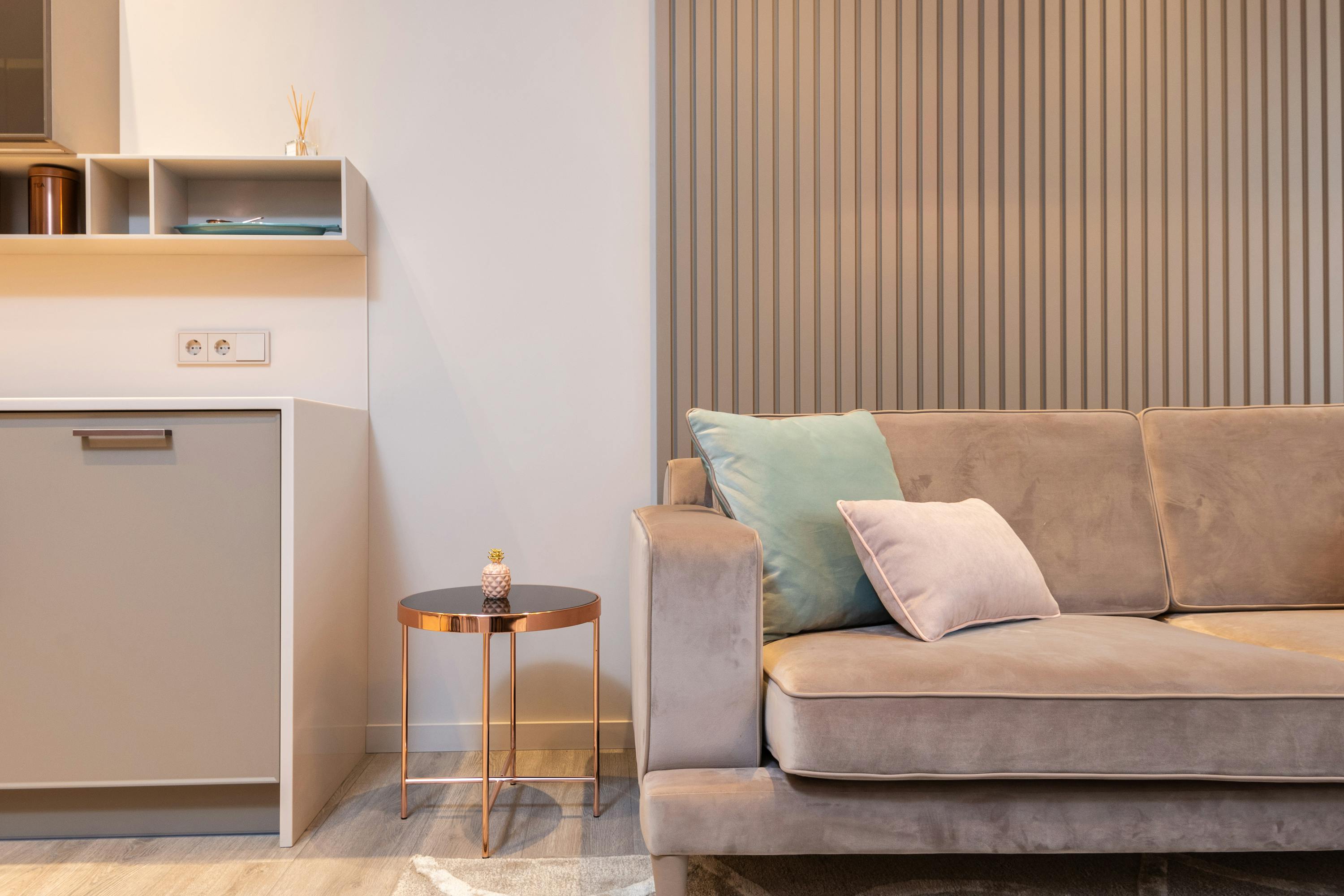
Harmony in interiors is achieved through balance rather than uniformity. Color and texture work together to shape mood and visual flow within a space.
Soft contrasts—light against dark, smooth against textured—add depth without overwhelming the eye. Furniture acts as a mediator between these elements.
Natural materials and muted palettes support calm environments, allowing the space to feel cohesive and intentional.
When thoughtfully layered, color and texture create interiors that feel timeless and composed.
“Harmony is felt when nothing stands out, yet everything belongs, working together to create a calm and balanced interior.”
Harmony within an interior emerges when color and texture are balanced thoughtfully. Rather than competing for attention, these elements work together to create visual flow and emotional comfort.
Furniture plays a central role in mediating contrast. Soft fabrics balance solid forms, while muted tones allow textures to take focus. This layering adds depth without visual noise.
When harmony is achieved, spaces feel calm and cohesive. Nothing feels excessive or disconnected, allowing the interior to remain timeless and composed.